





Journeys in Industrious England

Journeys in Industrious England, by Thomas Baskerville, Edited by Anthea Jones, Hobnob Press, 2023, 316 pages, 22 black-and-white illustrations.
Not to be confused with the hound of Arthur Conan Doyle or with the famous 18th-century typographer, the traveller was a country gentleman and landowner (1630– 1700) who set out from his home, a mansion (demolished) near Oxford, on ten journeys by horseback to various parts of southern England, and one in the north to York and Hull. The records of Thomas Baskerville’s expeditions, made in pen and ink, fortunately survived in libraries in Oxford and London, until they were finally made available in print more than 300 years later, thanks to the work of his editor, Anthea Jones.
A local historian and frequent Context contributor, Jones is an expert on Cheltenham and its district, as well as the Cotswolds. Particularly relevant is her work on Johannes Kip, The Gloucester Engravings, that brings us three-dimensional images of the district’s major country houses. Everything is done in the new book to make Baskerville’s sometimes difficult original manuscript into an accessible modern version, complete with an index and a list of further reading.
At the end of the 1600s, the country was recovering from the civil war, with the Church of England, Oxford and Cambridge universities, cathedrals and episcopal palaces restored to the hands of the supporters of Anglicanism. Fabric was repaired, organs reinstalled, choirs re-employed and building projects resumed. It is not surprising that a man of Baskerville’s modest but sufficient wealth and his strong links with Oxford (where his father, Hannibal, had been a student with an interest in history, later passed on to Thomas) should wish to view in person these developments and set down his impressions. The colleges in both universities (the only two in England at that time) are mentioned, and unusual facts about their customs, feasts, architecture and personnel are recorded in a form that might otherwise not have survived without Baskerville’s tireless curiosity.
Baskerville is no library mouse, however, and his interests include roads, floods, bridges, forestry, the cultivation of crops, brewing and cider making, and taverns and inns where you could spend the night with merriment and feasting. Fish as food and the sport of catching trout (or sea-fishing when he was near the east coast) are a major topic throughout the ten trips, in an era when the country’s freshwaters still abounded with a wide range of fish and other edibles.
At major stopping points, or where routes intersect, the author’s impressions of towns and cities are recorded in short, amusing quips. He loved Nottingham but found Leicester ‘an old stinking town situated upon a dull river’. He lodged in various inns and country houses where his genteel hosts and their wives are described and rated rather as you might find in today’s social media or TV’s Four in a Bed. At the Red Lion, the Leicester inn of choice, he mentions its ‘gallery or dining room of great length with a long table in it to entertain people’, and goes on to describe in detail ‘the plaister like that of Paris’ and the patterns it included. Elsewhere, as at Hull, he mentions features that might well now have disappeared, such as the city walls and the fortifications installed to defend its open location on the east-facing estuary. Naval wars with the Dutch still went on, and his interest in them compares with his great contemporary, the diarist and naval administrator, Samuel Pepys.
For those with knowledge of the vital years of the late 1600s, on the verge between pre-modern and truly modern, this new edition from Hobnob adds a vital item to its useful list of specialist but highly practical publications. It is a tribute to Anthea Jones’s editing skills. Other readers will find it an intriguing introduction to a part of history at once remote and yet familiar enough to enjoy treading the same ground and seeing the same sights.
This article originally appeared as ‘Horseback view’ in the Institute of Historic Building Conservation’s (IHBC’s) Context 180, published in June 2024. It was written by Graham Tite, heritage consultant to Rother Council, East Sussex.
--Institute of Historic Building Conservation
Related articles on Designing Buildings Conservation.
IHBC NewsBlog
IHBC sponsors Gardens Trust event 23-4 Sept 2026
.jpeg)
'Learning from the Past, Shaping the Future’ takes place in Milton Keynes
Renovations to Frank Lloyd Wright's Fallingwater complete
.jpg)
World Heritage Preserved project opens house for tours again
Shakespeare Birthplace Trust places Hall's Croft on HAR Register
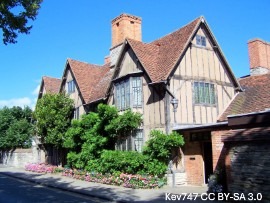
Stratford-upon-Avon home of Shakespeare's daughter is 'At Risk'
Lady Grange’s House repaired on St Kilda
.jpg)
National Trust for Scotland repairs stone cleit with link to famous island resident
Griff Rhys Jones on BBC Radio 4 Today programme
,_Green_Lane,_Derby.jpg)
The Victorian Society’s President unveiled its latest Top Ten Endangered Buildings 2026.
Need a MATE? Book your place now.
IHBC offers free webinars on applying for IHBC accreditation (Full & Associate).
UK Stained Glass Repository finds windows new homes
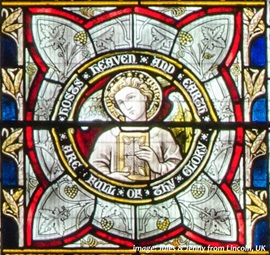
How are stained glass windows are rescued, stored and repurposed?
APPGEBE report sets high aims for quality
'Government must not sacrifice quality in drive to build 1.5m homes'
New measures protect Historic Shipwrecks from heritage crime

Underwater cultural heritage benefits from new HE guidance
How could the City of London skyline look in 6 years' time?

Visualisation shows approved planning applications as completed buildings
National Trust for Scotland calls for VAT cuts
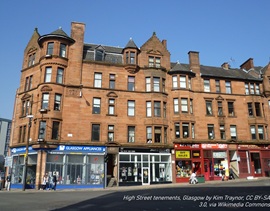
Heritage neglect is encouraged by current policies
IHBC's 'Context' Issue 186 features Industrial Heritage
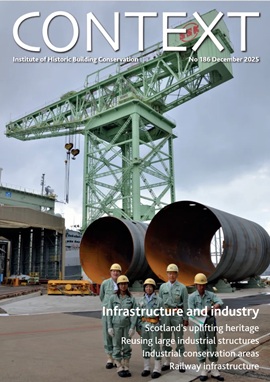
IHBC's members' journal reports on the challenges of conserving infrastructure
Book now for IHBC Annual School 2026

IHBC Annual School is taking place 18-20 June 2026 in Newcastle
RICHeS Research Infrastructure offers ‘Full Access Fund Call’
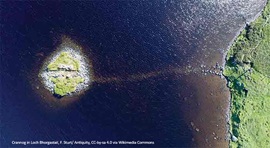
RICHeS offers a ‘Help’ webinar on 11 March
Latest IHBC Issue of Context features Roofing
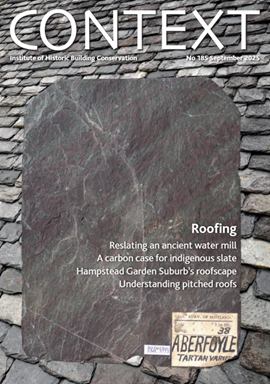
Articles range from slate to pitched roofs, and carbon impact to solar generation to roofscapes
Three reasons not to demolish Edinburgh’s Argyle House

Should 'Edinburgh's ugliest building' be saved?
IHBC’s 2025 Parliamentary Briefing...from Crafts in Crisis to Rubbish Retrofit
IHBC launches research-led ‘5 Commitments to Help Heritage Skills in Conservation’
How RDSAP 10.2 impacts EPC assessments in traditional buildings

Energy performance certificates (EPCs) tell us how energy efficient our buildings are, but the way these certificates are generated has changed.